The First Week. A Record of Starting Out.
Most accounts of beginner fitness programmes skip the first week entirely, jumping forward to the point at which measurable progress becomes visible. But the first week is the most consequential period. It establishes whether the habit forms or does not. Eleanor Whitfield, contributing editor at Dalmor Notebook, spent January 2026 reviewing beginner movement logs submitted by fourteen readers across England and Scotland. The finding was consistent: in twelve of fourteen cases, the first activity recorded in week one was a walk.
The walks varied considerably in duration — from eleven minutes to forty-two — but the decision to walk first was nearly universal. When asked, participants offered similar explanations. Walking required no equipment beyond comfortable shoes. It could be started from the front door. It did not require a changed relationship with one's body before it could begin.
This is not a small observation. The literature on habit formation suggests that the barrier to beginning an activity is often more significant than the activity itself. Walking removes that barrier almost entirely. London, 2026 — observations compiled from reader submissions received between 5 and 12 January.
Step Counts. What the Numbers Document.
Among readers who used a step-counting device in week one, the average daily count was 4,200 steps. By the end of week four, the average had risen to 7,800 steps. The progression was not the result of structured target-setting in most cases — it was organic, driven by growing comfort with movement and an increasing awareness of when the body was ready to continue.
The step count metric is useful precisely because it is neutral. It does not require a subjective assessment of effort. A reader who walked for twenty minutes on a flat suburban route and a reader who climbed a steep hill for fifteen minutes both recorded steps. The metric allowed comparison across very different starting points, all of which were valid.
"The most consistent finding across beginner movement records is that progress is visible only in retrospect. During the first two weeks, nothing feels like it is changing. By week four, the original baseline feels distant."
The ten thousand steps figure, widely cited in fitness contexts, is a useful long-term benchmark but a poor week-one target. Readers who began with that number as their first goal reported higher rates of abandonment. Those who began with a more modest objective — completing one walk per day, however brief — were more likely to still be active by the end of month two.
Pacing. The Undervalued Variable.
Pace is perhaps the most important variable that beginner fitness writing underserves. The walk that builds a movement habit is not a brisk, purposeful stride. It is a pace at which conversation is comfortable, breathing is slightly elevated, and the body is warm but not straining. Exercise science describes this as the moderate-intensity zone, a range in which the cardiovascular system is engaged without demanding recovery time that disrupts the following day's activity.
One reader, a 43-year-old administrator from Leeds, documented her first eight weeks in detail. In week one she described walking "as fast as possible, trying to make it count." By week three her log notes a change: "walking at a pace I can hold. Not racing. Just moving." Her weekly distance increased from week three onward.
This pattern repeated across multiple submissions. The shift from effortful to comfortable pace appears to be a natural calibration rather than a coached intervention. Bodies, given the opportunity, tend to settle at the pace they can sustain.
Route Planning. The Practical Architecture of a Walking Habit.
The route a beginner chooses for walking is more consequential than it may appear. Readers who reported walking the same route consistently in weeks one and two were more likely to complete their planned sessions than those who varied their route from the outset. A familiar route removes the small cognitive load of navigation and allows attention to shift to the experience of movement.
Route familiarity also enables progress monitoring without devices. When a reader has walked the same loop five times, they begin to notice when it feels easier. That internal record is a motivational signal that step-count apps can obscure: the body's own recognition of gradual progression.
By week three or four, varied routes become valuable. New environments introduce mild navigational engagement and change the sensory landscape of the walk, which sustains interest. The standard progression observed in reader logs: one fixed short route for weeks one and two, an extended version of that route for weeks three and four, and wider variation thereafter.
- 01 A single fixed walking route in the first two weeks reduces the cognitive overhead of beginning.
- 02 Comfortable pace — not maximum pace — produces more consistent week-on-week participation.
- 03 Daily step count rising from ~4,000 to ~8,000 over four weeks is a well-documented beginner progression.
- 04 The warm-up sequence before a walk — five minutes of gentle movement — reduces post-walk stiffness notably.
The Warm-Up Sequence Before a Walk. Why It Matters.
Many beginner fitness resources treat the warm-up routine as optional — a courtesy gesture before the "real" exercise begins. This framing is unhelpful and, for those beginning an active lifestyle after a period of low movement, potentially counterproductive. The warm-up sequence is the transition state between stillness and motion. For someone who has been largely sedentary, that transition is the most demanding physical moment of the session.
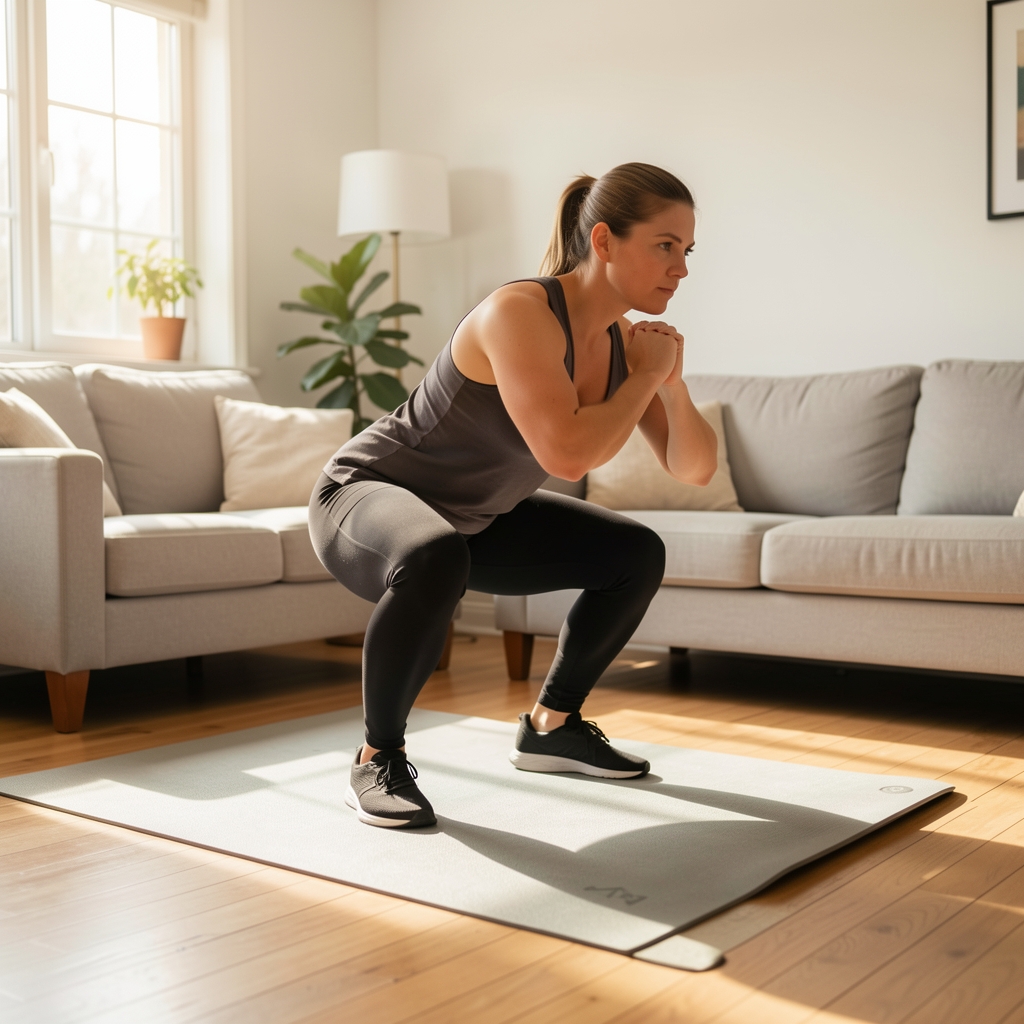
A five-minute warm-up before a thirty-minute walk is not a delay — it is the beginning of the session. Leg swings, slow ankle rotations, hip circles, and arm reaches conducted at low intensity allow the connective tissue around major joints to accommodate movement before load is applied. Readers who incorporated a consistent warm-up sequence reported fewer instances of lower back stiffness and hip discomfort after walks.
The cool-down stretches after a walk serve a different function: they address the muscle shortening that occurs during sustained walking and help regulate the return of heart rate and breathing to resting levels. A five-minute cool-down — quadriceps stretch, hamstring reach, calf hold, chest opener — is documented across beginner programmes as a significant factor in next-day readiness.
Together, warm-up and cool-down represent ten minutes within a forty-minute session. In the records reviewed for this article, the sessions most likely to be repeated were those which included both. The body remembers a session that ended comfortably.
Integrating Walking into Daily Activity Goals. A Practical Account.
One reader — a 31-year-old teacher from Bristol — structured her beginner fitness practice around a single daily activity goal rather than a time-based or distance-based target. Her goal, recorded in a small notebook she carried throughout January, was: "move for longer than yesterday." The specificity was zero; the direction was everything.
By the end of four weeks she had walked on twenty-three of twenty-eight days. Her total walking time had increased from eleven minutes on day one to forty-seven minutes on day twenty-eight. She had not followed a structured programme. She had followed a single, directional commitment and adjusted it to the conditions of each day.
This account is illustrative of a broader pattern: for beginners, flexibility within a direction is more productive than rigid schedules. The schedule breaks. The direction holds.
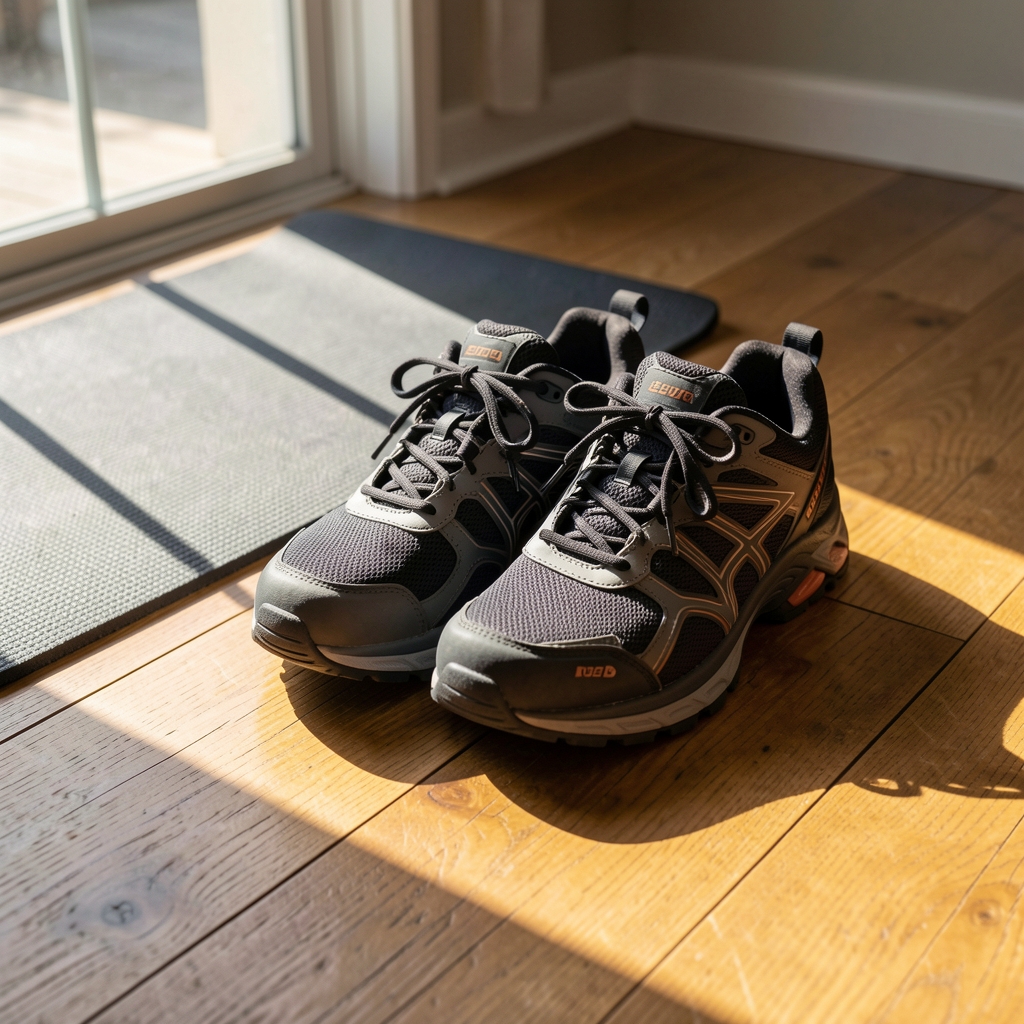
Walking, as a foundation for beginner fitness, requires very little infrastructure. A pair of comfortable shoes. A door. A direction. The records reviewed for this article suggest that these three things, taken seriously, are sufficient to establish the movement habit from which all subsequent progression follows.